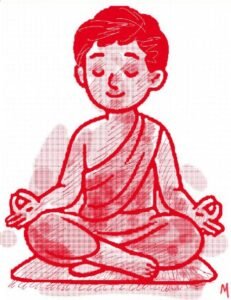

The word Āshram means a place or stage where one makes disciplined effort—whether for learning, service, self-growth, or spiritual practice. The Ashrama System in Hindu tradition is a four-stage framework that guides a person’s life from childhood to spiritual liberation. It helps individuals balance learning, duty, fulfillment, withdrawal, and spiritual pursuit in a natural, step-by-step progression.
Vānprastha Āashram : Withdrawal from household duties and a shift toward simplicity and social welfare.
The third stage of life encourages turning inward, marking a gradual shift from worldly responsibilities to inner reflection. This stage, lasting approximately 25 years, is the first phase of the nivṛtti (detachment) mārga. It is an Upāsanā-oriented ashram, a time to withdraw the senses, reduce desires, and turn the mind toward Bhagawān. It does not necessarily require leaving home or going to the forest.
A Vānaprasthi prepares for renunciation—slowly detaching from the accumulations of the grihastha ashram—by engaging in the following:
- Handing over responsibilities to children and others, offering guidance only when asked.
- Spending time on wholesome recreation and physical exercise.
- Traveling and broadening one’s outlook.
- Maintaining relationships with kindness but without entanglement.
- Reflecting on life, letting go of regrets, forgiving others, and cultivating serenity.
- Studying scriptures, attending satsang, and engaging in regular self-reflection.
- Guiding younger generations with wisdom gained through one’s life experiences.
- Volunteering in social service and other meaningful causes.
- Centering life on prayer, meditation, and inner maturity.
Vānaprastha serves as a bridge between the active engagement of grihastha and the freedom of sanyāsa. When embraced with sincerity, it becomes a period of deep joy, wisdom, and inner flowering.
— Sanjay Mehta
Back to Purushārtha and Āshram Vyavasthā (System) – in Hindu Philosophy